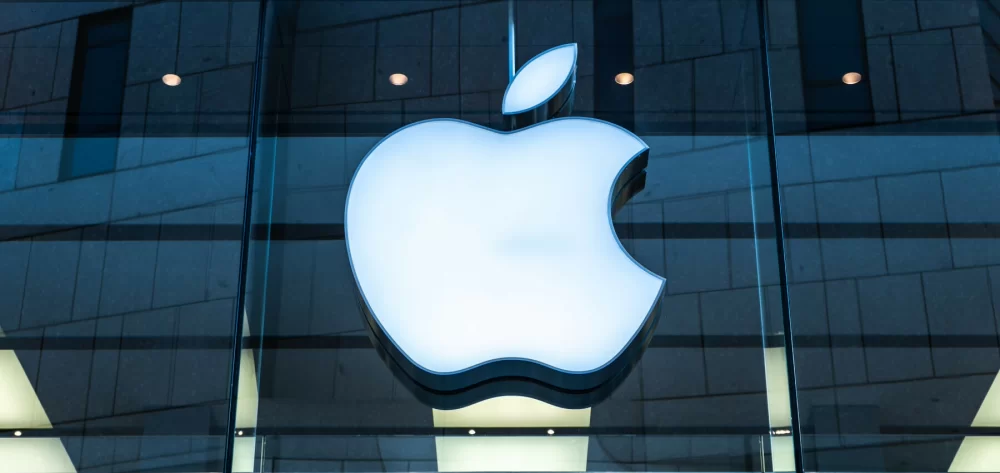
From the iPhone to the Apple Watch, iMac, and iPad, products from US computer maker Apple have become a part of life for many Swiss. But some investors also see Apple as an investment opportunity. In this guide, we explain the most important things you should know if you want to invest in Apple.
What do I need to do in order to invest in Apple?
In order to invest in Apple and other companies that are listed on stock exchanges, you must first open a stock brokerage account, or an account with a neobank that has an investment service, like Zak, Yuh or Neon. You can open a stock brokerage account at many Swiss banks, including banks that offer online trading platforms.
How much does buying Apple shares cost in Switzerland?
When you buy Apple shares, or shares in other stocks or exchange-traded funds (ETFs), your bank charges you brokerage fees for the transaction. You also pay Swiss stamp duties, which are the same no matter which Swiss bank you use to buy the shares. When you sell your Apple shares, you pay the same fees that you paid when you bought the shares.
Most Swiss banks charge custody fees to hold your shares. You can compare the total costs of brokerage and custody fees for trading Apple stock with the online trading comparison. Simply select the US equities profile, or choose the individual profile option to create a custom profile.
Table 1: The five Swiss stockbrokers with the lowest brokerage fees for investing in Apple shares (1000 US dollars)
| Bank |
Fees |
| Saxo Bank |
CHF 1.90 |
| Swissquote |
CHF 5.50 |
| Tradedirect |
CHF 5.55 |
| Cornèrtrader |
CHF 12.40 |
| Raiffeisen |
CHF 32.75 |
Data based on the trading comparison by moneyland.ch. Providers not included in the trading comparison, including neobanks, are not taken into account. The comparison is based on a USD 1000 investment in Apple stocks. The comparison accounts for brokerage fees and Swiss stamp duties, but does not include custody fees. Date: May 11, 2026.
For small investments of up to several hundred francs, the cheapest brokerage services are offered by neobanks Neon and Yuh. The exact values can vary between investment profiles. For bigger investments, Swiss banks that specialize in stock brokerage often have lower fees. You can find more information on investing with neobanks in the moneyland.ch guide.
Which ETFs can I use to invest in Apple?
There are numerous ETFs that invest in Apple. Funds that invest specifically in tech companies are most likely to have a large Apple stock component. Buying shares in an ETF that invests in Apple is an alternative to buying Apple stock directly, and has the added benefit that your investment is more diversified.
Table 2: ETFs with a large Apple component
Exchange-traded fund
(ETF) |
ISIN |
Domicile |
Total expense
ratio (TER) |
Apple
component |
State Street SPDR S&P U.S. Technology Select
Sector UCITS ETF USD |
IE00BWBXM948 |
Ireland |
0.15% |
19.59% |
iShares S&P 500 Information Technology Sector
UCITS ETF USD (Acc) |
IE00B3WJKG14 |
Ireland |
0.15% |
18.53% |
Xtrackers MSCI USA Information
Technology UCITS ETF 1D |
IE00BGQYRS42 |
Ireland |
0.12% |
18.46% |
Xtrackers MSCI World Information
Technology UCITS ETF 1C |
IE00BM67HT60 |
Ireland |
0.25% |
18.41% |
State Street SPDR MSCI World
Technology UCITS ETF USD |
IE00BYTRRD19 |
Ireland |
0.30% |
18.24% |
Source: Justetf.com. Date: May 11, 2026.
Compared to buying shares in individual stocks, buying shares in ETFs is advantageous because even if you can invest in many different companies even if you have relatively little investment capital. That reduces the risk of losing money. But it is important to understand that all of the ETFs in the table above invest exclusively in the tech sector, so they are not broadly diversified.
Which returns are possible with Apple stock investments?
There is no way to predict how the value of a stock will change in the future. That rule applies to Apple as well. The only reference point we have is past performance. A look at historical data shows that over the past ten years, Apple’s stock has delivered returns that are substantially higher than the average for the whole global and US stock market. Converted into Swiss francs, the price of an Apple share increased nearly tenfold between May 2016 and May 2026.
Of course, it is possible that Apple’s stock price could develop negatively in the future. Since its establishment in 1976, Apple has experienced periods of poor performance as well. As a general rule, good performance in the past is never a sure indicator that a company will continue to perform well in the future.
Table 3: Ten-year performance of Apple’s stock compared to selected global and US stock indexes
| Stock/Index |
ISIN |
5-year-performance
in CHF (2018-2023) |
| Apple |
US0378331005 |
893.93% |
| Nasdaq-100 |
US6311011026 |
429.25% |
| S&P 500 |
US78378X1072 |
188.26% |
| MSCI World |
XC0009692739 |
131.83% |
| Dow Jones Industrial Average |
US2605661048 |
125.44% |
Performance in CHF, excluding dividends. Dates used for the performance comparison: May 6, 2016; May 6, 2026. Source: Investing.com.
Apple has paid out dividends to its shareholders without interruption since 2012. Apple dividends are paid out on a quarterly basis.
What are the risks of investing in Apple stock?
Investing in individual companies always brings with it a substantial risk of losing money, and it is important that you are aware of the risks before you invest. The value of a company’s stock can fall for both short terms and long terms. Even the chance of losing all your invested capital cannot be completely ruled out, however unlikely an Apple bankruptcy may seem. Investment funds like ETFs hedge against these risks by spreading out their capital over many different companies. But even with enough diversification, it is still possible to lose money, especially with ETFs that invest in just one industry sector.
Your investment portfolio should never be built around just one company or industry sector. Instead, you should divide your capital between different companies, industry sectors, and geographic regions in order to spread the risk as broadly as possible.
When you buy shares in stocks that are denominated in a foreign currency, there is also a currency exchange risk. Apple’s stock is denominated in US dollars. If the US dollar were to lose value against the Swiss franc in the future, then the Swiss franc value of your Apple shares will also shrink.
How do taxes impact Apple investments?
Private investors normally do not pay taxes on capital gains in Switzerland. Because Apple is a US company, the US withholding tax is deducted from dividends. As an investor in Switzerland, you can reclaim the US withholding tax in part via your Swiss tax return.
Notice: This article is provided for informational purposes only, and should not be considered investment advice. The publishers do not accept any liability in connection with this article.
More on this topic:
Compare Swiss stock brokers now
How to invest in the SMI
How to invest in the DAX
How to invest in Tesla
How to invest in Alphabet (Google)
How to invest money in Switzerland



 Deal of the Day