Precious metals like gold have been an established asset class and store of value for a long time now. This moneyland.ch guide lists the most important advantages and disadvantages that you should be aware of before you invest in precious metals.
The advantages of precious metals as an investment
Unlike fiat currencies and cryptocurrencies, precious metals have an intrinsic value. This value is primarily derived from the scarcity and usefulness of these materials. Reserves of gold, silver, platinum, and palladium are limited by nature, and large-scale mining is concentrated in just a few countries. These metals – particularly silver, platinum, and palladium – are in strong demand from industry, and this tends to have a positive impact on market prices.
Most investors have savings accounts, and stocks and exchange-traded funds (ETFs) are becoming increasingly popular. But precious metals, especially those other than gold, are less commonly found in investment portfolios. These metals can be used to diversify your portfolio, and diversification is generally advisable. Spreading your wealth across many different kinds of assets helps reduce the risk of losing money.
Precious metals, and particularly gold, have enjoyed a reputation for being resistant to crises and inflation. The hoarding of gold by frightened investors is common during periods of insecurity. Precious metals are movable assets (unlike real estate), and in contrast to many other tangible assets (wine, for example), they never spoil. Although gold is not necessarily a safe haven, in recent years it has proven to be crisis resistant, and a profitable investment.
Important: There is never a guarantee that the value of gold will continue to increase. As for silver, platinum, and palladium, their prices are heavily influenced by industrial demand, which tends to fall during economic downturns.
Holding physical precious metal bullion does not require financial service providers and other counterparties. There is no counterparty risk, because your assets are in your own custody.
It is important to note, though, that only holding physical bullion yourself frees you from counterparty risk. This benefit does not apply when you use precious metal derivatives like precious metal accounts and precious metal ETFs.
The disadvantages of precious metals as an investment
Gold and other precious metals do not yield interest or dividends. That is a disadvantage compared to interest-yielding investment vehicles like savings accounts and medium-term notes. It is also a disadvantage compared to dividend-yielding securities like stocks. The only way to earn returns from precious metals is through capital gains.
Investing in precious metals typically generates some ongoing costs. When you use precious metal ETFs or exchange-traded commodities (ETCs), their operators charge you ongoing fees (shown as the TER). Precious metal accounts have ongoing account fees.
Theoretically, it is possible to hold physical precious metals in bullion without incurring ongoing costs. But that is only possible if you already have an adequate place to store your bullion at no extra cost. If you do not, then you will have to account for the cost of a bank safe deposit box or a non-bank safe deposit box, storage in a bonded warehouse, or the purchase of an adequate safe to store your bullion at home. Storage is a bigger concern for metals with a relatively low price, such as silver, because storing an amount of substantial value requires a significant amount of space.
The prices of precious metals are not as stable as their reputation might lead you to believe. Whether you plan to invest for a short term or a long term, you should be ready to accept high price volatility. This is especially true for silver, platinum, and palladium, the prices of which can fluctuate strongly along with industrial demand. What is more, there is no guarantee that you will be able to sell your assets at a profit, even if you hold them for a very long term. A look at historical data shows that big losses are always possible, even over long terms. For example, between 1980 and 2000, gold lost more than half of its value (in US dollars).
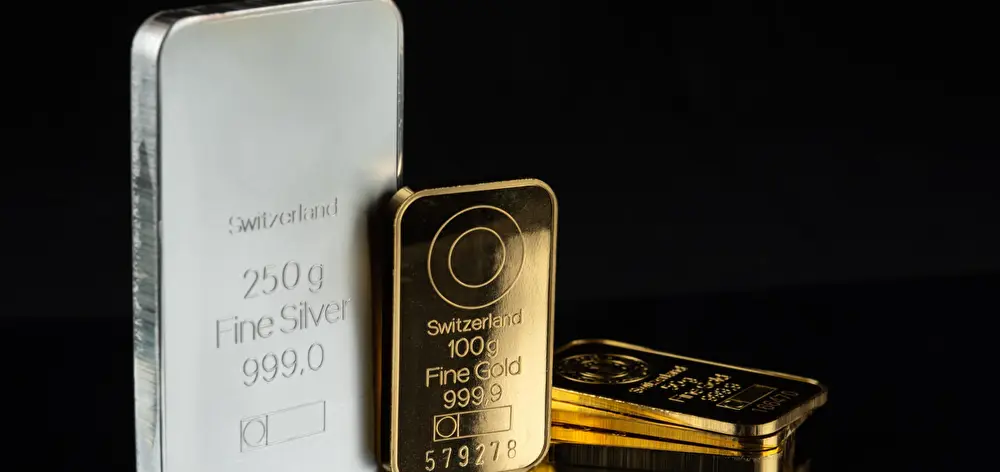
When buying physical bullion, it is important to choose the dealer carefully. Make sure you understand that dealers add markups to the spot price, and these markups directly detract from your possible returns. Depending on which metal and weight you buy, and which dealer you buy from, the markups can be very high. Comparing prices across different dealers before investing is advisable.
In most cases, the markups are smaller when you buy bars, as opposed to buying coins and medallions. Unless you are a collector, it is generally advisable to stick with bullion in the form of bars. It is also beneficial to buy a large bars instead of many smaller ones, as the markups are typically lower for bigger bars.
Should I invest in physical bullion, a precious metal account, or an ETF?
Whether you should purchase physical metal or invest indirectly through a precious metal account or ETF depends on your specific needs and the length of the investment term. Precious metal accounts and ETFs normally have smaller markups on spot prices, and are usually a better choice for short-term precious metal investments. But over longer terms, the ongoing fees add up to where they can significantly detract from your returns. Holding physical bullion is generally a better choice for long-term investing, because you avoid both ongoing fees and counterparty risk.
Gold bullion is exempted from Swiss value-added tax (VAT). But when you buy physical silver, platinum, and palladium in Switzerland, you have to pay VAT on top of the dealer’s price. The cost of VAT directly detracts from possible returns. One way to avoid paying VAT is to buy precious metals that are stored in a bonded warehouse, but that also has a disadvantage in that you have to pay ongoing storage fees.
Disclaimer: This article is provided for informational purposes only, and should not be considered as investment advice. The publisher does not accept any liability in connection with this publication.
More on this topic:
How to invest in gold
Tips for buying gold in Switzerland
How to invest in silver
Tips for buying silver bullion in Switzerland
How to invest in platinum
How to invest in palladium



 Deal of the Day