Many Swiss travelers end up buying things in foreign countries and then taking these items back to Switzerland when they return from their journey. But many travelers do not know that, in many cases, they can reclaim the taxes paid on their travel purchases. Depending on the value of their purchases, the savings gained from tax refunds can reach into hundreds of francs.
What is a tax refund?
Most countries in the world have a value-added tax (VAT) or sales tax. When you buy goods or services from a store or other merchant, the tax is added to the price you pay. Often, the taxes are already accounted for in price tags.
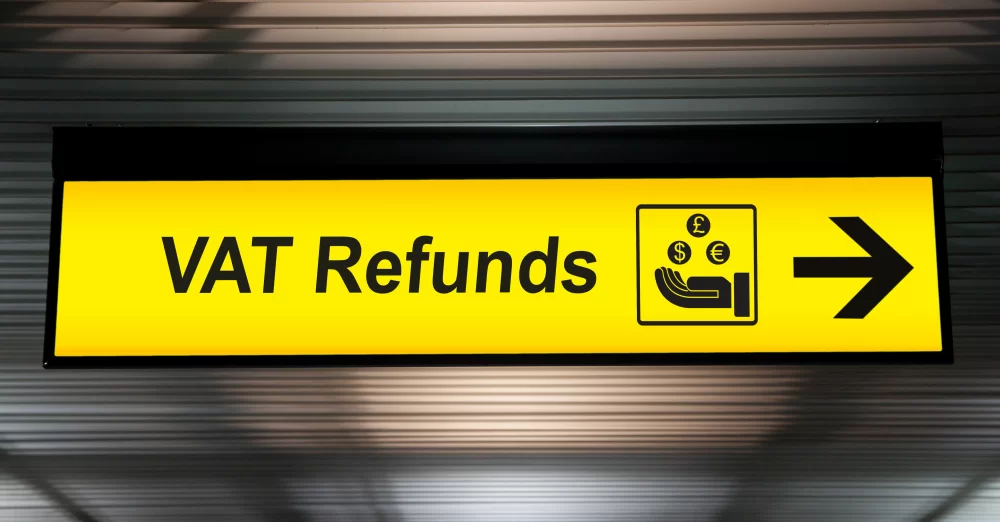
Many countries let non-residents reclaim the VAT or sales tax paid for physical goods that they take out of the country with them when they leave. This is called a tax refund because you get back the taxes that you paid when you purchased the items.
How much of the price I pay goes to VAT or sales taxes?
Value-added taxes and sales taxes vary between countries. Taxes are levied as a percentage of the value of your purchase.
Example: A country has an 18-percent VAT rate. You buy an item that costs the equivalent of 1000 francs, before tax. The VAT would be 18 percent of that amount, or the equivalent of 180 francs. So the total price you would pay at the store would be equal to 1180 francs. In this case, you could save up to 180 francs by claiming a tax refund when you take the item with you when leaving that country.
You can get an idea of how much tax you pay when you buy goods and services in different countries by scrolling over the map below.
The more VAT or sales tax you pay on your purchases, the more you can benefit from claiming tax refunds.
Which purchases are eligible for tax refunds?
In most countries, you can only claim tax refunds for physical goods that you buy in your travel destination and take out of the country with you when you leave.
As a general rule, it is not possible to reclaim taxes paid for services like hotel stays, restaurant dining, events, or other things that you cannot take back with you. However, there are exceptions to this rule. In Argentina and Uruguay, for example, VAT is discounted from hotel stays for non-residents, but there is no need to actively claim a refund.
Do all countries allow tax refunds?
No. Although in theory, non-residents are not subject to a country’s VAT or sales taxes, there are some countries that simply do not give you the option of getting the taxes you pay refunded. One reason for this is the amount of administration involved.
Of the countries that do refund taxes upon request, many only let you claim tax refunds for purchases that exceed a certain minimum value. Depending on the country, the minimum purchase value may apply for purchases from one store only, or it may apply to all purchases made in the country combined. The table below provides an overview of the minimum spending requirements for tax refunds in many countries.
How do tax refunds work?
When you shop at a physical or online store, the retailer is required to add a sales tax or VAT to the price of the purchase. The retailer holds this money and passes it on to the government.
Countries in which tax refunds are possible allow merchants to refund taxes to non-residents when the taxable item is taken out of the country. In this case, the merchant returns the money it withheld for taxes, as the purchase is not taxable.
Merchants who choose to offer this service will provide you with a detailed invoice for tax refund purposes upon request. Rules vary between countries, but typically, the invoice must include information about the purchased items, the applicable VAT or sale tax, a unique invoice number, the merchant's contact information, and the personal information of you as the buyer.
When you leave the country, you can present the purchased item at customs along with this invoice. The customs officials will certify that you are exporting the item and stamp the invoice. In some countries, this process can also be done electronically.
After the invoice has been certified, you can send it back to the merchant to claim your tax refund (if the store offers this service), or collect the refund using a third-party tax refund service provider.
Can I get tax refunds for all my shopping?
No. Even in countries which provide tax refunds, stores normally are not legally obligated to offer this service. There are also stores that do not offer this service at all, and you will not normally be able to get tax refunds for goods purchased from these stores. If getting your taxes refunded is important to you, then you should check whether a store offers tax refunds before you buy.
Of the stores that do offer tax refunds, only a very small portion handle the refund process themselves. Among those that do, the way in which you receive the refund can vary. Some merchants will transfer the money to your bank account or credit it to your bank account. Others will let you collect the refund in cash or get it credited towards new purchases if and when you visit the store again in person.
The vast majority work with specialized third-party tax refund service providers (Global Blue and Planet, for example). These service providers handle the administration and the payment of refunds on behalf of the merchant. For you as the consumer, tax refund services offer convenience by simplifying the process of reclaiming taxes. In exchange, the service provider charges fees, which are normally deducted directly from your refund before it is paid out.
How do I know which shops offer tax refunds?
Tax refund service providers like Global Blue, Planet, and others may provide tools to locate their partner stores (on their websites or in their mobile apps, for example). Stores that partner with these providers usually display the tax refund provider’s logo so that you know that tax refunds are possible before you shop.
When you shop at other retailers, you should ask the store whether or not they offer tax-free forms before you shop.
Is using tax refund service providers like Global Blue worth it?
Depending on which stores you shop in, using third-party tax refund services may be your only option, as many stores do not offer their own tax refund services.
However, it is important to understand that you are not necessarily limited to using the tax refund service provider recommended by the store. Depending on which country you are traveling in, there may be many different tax refund services available. Comparing and using the most affordable service can save you a lot of money, especially when you buy very expensive items.
The table below provides an overview of various tax refund services, and gives you an idea of how fees vary between service providers. Note that some providers charge fees as a percentage of the entire invoiced amount (the price you paid for the item), while others charge fees as a percentage of the tax refund (only the taxes paid for the purchase).
What are the advantages and disadvantages of using established tax refund services?
Large, established service providers like Global Blue and Planet offer a lot of convenience. They often have numerous partnerships with stores which simplifies the process of receiving tax-free forms. These providers often have offices at airports and major border posts, or work with third-party agencies such as money changers and money transfer services. In some cases, you can simply submit the tax-free forms you received from stores at the counter when leaving the country and collect your refund in cash or as a credit card statement credit, without having to wait for the claim to be processed. Some providers let you get cash refunds in advance, and then submit stamped invoices at a later date when you leave the country.
The disadvantage is that, in exchange for the convenience offered, these service providers often charge relatively high fees. What is more, the fees are often somewhat intransparent.
What are the advantages and disadvantages of using smaller tax refund service providers?
Smaller service providers – such as those that only provide their services through digital channels – often have lower fees. For large purchases, the difference in price compared to large providers can be substantial, especially when you shop in countries with very high VAT or sales tax rates.
The disadvantage is that using them requires more effort. Typically, you must ask the store for a detailed invoice or tax-free form, and have them address it to the tax refund service provider instead of to you. Not all shops offer these forms, and some may not be willing to address them to a third-party service provider. Stores that partner with a specific tax refund service provider may, in some cases, only offer tax-free forms for that specific provider. It is important that you enquire about this before you shop in order to avoid disappointment.
Once you have this form, you must submit it to the tax refund provider (via a mobile app, for example). The service provider will process the claim. Once the claim is processed, you will receive the money as a cashless payment – typically by bank transfer or as a credit card statement credit. It can take some time until you receive the money.
Can I get tax refunds without using a third-party service provider?
In some cases, yes. But in most countries this is only possible if the merchant you bought the item from provides its own tax refund service. When this is the case, you may receive the money as a bank transfer or statement credit, or you may have to collect the refund in person at the store. In both cases, you must submit the invoice for the goods purchased from the store after getting it stamped by customs when taking the item out of the country.
It is always advisable to check whether a store provides its own tax refund service, as this is typically cheaper than using a third-part tax refund service.
Is there a deadline for claiming my tax refund?
In most countries, you have a maximum of three months from the date of purchase to take the item out of the country and get the invoice stamped by customs.
Most countries require you to claim your refund within a certain period of time after getting your invoices cleared by customs when you take the goods out of the country. Depending on the country, you may have to claim the refund within as little as three months from the date of purchase. But there are also countries in which claims do not expire at all.
Examples of expiry period for claiming tax refunds:
- Cyprus: One year from the date of purchase.
- Czech Republic: Six months from the date of purchase.
- Denmark: One year from the date of purchase.
- France: Six months from the date of purchase.
- Germany: Up to four years from the date of purchase.
- Greece: Three months from the date of purchase.
- Italy: Three months, in addition to the month in which the purchase was made.
- Malta: Three years from the date of purchase.
- Portugal: 150 days from the date of purchase.
- Spain: Four years from the date of purchase.
- Sweden: One year from the date of purchase.
- Turkey: Three months from the date on which the invoice is stamped by customs.
- United Arab Emirates: Twelve months from the date on which the invoice is stamped by customs.
Short expiry periods are especially problematic if your claim is processed by the store itself, and you want to return to the store and collect your tax refund in person when you next visit the country.
More on this topic:
Compare travel insurance offers now
Compare Swiss credit cards now
How to save money at airports
How to cut the cost of car rentals
A basic guide to travel insurance



 Deal of the Day