Risk is a big part of the experience you get from extreme sports. Being properly insured against the risks can help protect your financial life while you do the activities you love.
1. Accident insurance
Rules governing mandatory Swiss accident insurance allow insurance companies to reduce benefits (including coverage for treatment, loss of income, and disability pensions) by up to 50 percent if an accident results from your taking exceptional risks.
As per recommendations from the UVG/LAA ad-hoc commission, the following sports are always considered to be an extraordinary risk:
- Autocross (including training)
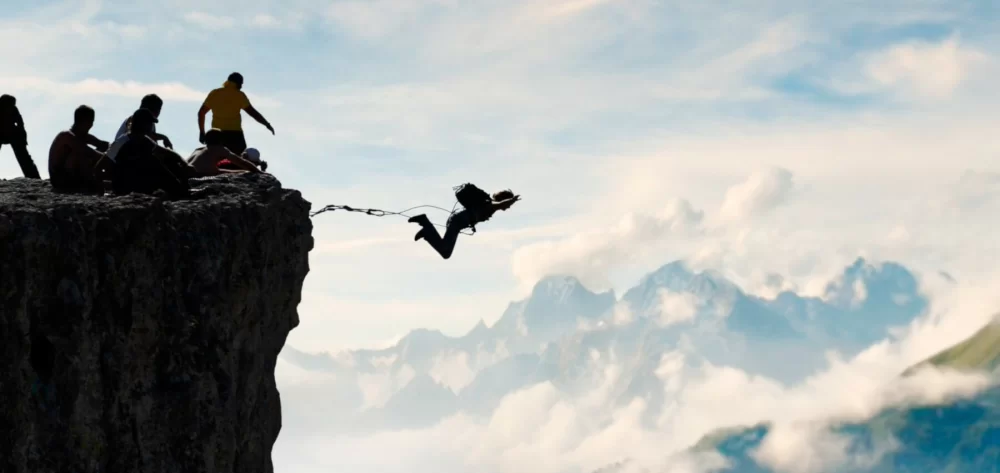
- Basejumping
- Bicycle jumping with acrobatic art
- Cicuit racing (including training)
- Downhill mountain biking (including training)
- Driving cars on race tracks (excluding defensive driving courses)
- Hillclimbing
- Motocross (including training)
- Motorboating (including training)
- Motorcycle racing (and training on race tracks)
- Quadbiking (including training)
- Rally cars (driving against time)
- Riverboarding
- Snocross (including training)
- Stock car racing (including training)
- Speedflying
Sports which are normally covered but are considered exceptional risks in certain cases (primarily when practiced competitively):
- Boxing, combat sports (if full-on or competitive)
- Go-karting (training and racing with vehicles capable of speeds above 100 Kmph)
- Karate (extreme karate, such as splitting bricks)
- Motor boats (racing and training)
- Skiing (with the goal of setting a record)
- Scuba (at depths exceeding 40 meters)
Sports which are normally covered but are considered an exceptional risk in the case of gross negligence:
- Buildering (under dangerous conditions)
- Canyoning (if security guidelines are not followed)
- Climbing (if security guidelines are not followed)
- Hanggliding and parachuting (under dangerous conditions)
- Mountain climbing (if security guidelines are not followed)
- Off-slope winter sports (if official security guidelines and regulations are not precisely followed)
- Sailing and canoeing (under extreme conditions)
- Snowrafting (without taking appropriate security measures)
- Tactical shooting sports (when not organized and supervised)
In extreme cases, accident insurance providers can deny insurance benefits altogether. This could be the case if, for example, you attempt a difficult alpine climb alone in poor weather conditions in spite of warnings.
Some accident insurance providers offer employers supplementary insurance which closes gaps in compulsory accident insurance. This is the best way to be insured against the risks of extreme sports. However, your employer has to take out this supplementary accident insurance for all of their employees. You cannot take it out on your own. It is worth checking whether your employer’s accident insurance includes this supplemental coverage.
If you do not receive adequate insurance from your employer, you should consider other options to close possible gaps. Options for insuring yourself privately are somewhat limited:
- Extreme sports associations may give their members the option of taking out special insurance. For example, the Swiss diving association SUSV/FSSS offers its members a diving insurance policy underwritten by Helsana. Among other things, it includes coverage of up to 500,000 francs towards closing the gap if your loss-of-income benefits from compulsory accident insurance are reduced. The Schweizerische Auto- und Motorradfahrer-Verband (SAM) also offers insurance for members with a valid sports license.
- The Swiss Paraplegic Group offers a membership program which pays out a 250,000-franc benefit to any member who becomes permanently bound to a wheelchair due to a spinal cord injury. This provides one means of making up a shortfall in accident insurance benefits.
- Some Swiss insurance brokers offer supplemental accident insurance for certain extreme sports which may cover some activities that are not otherwise part of your mandatory accident insurance. You can take out this insurance privately. The downside: It is relatively expensive.
2. Liability insurance
If you cause injury or damage to other people or their property while practicing extreme sports, you may be liable for the associated costs and loss of income.
Swiss personal liability insurance generally excludes liability for damages if the cause of damage is foreseeable, or if the risk of damages is high. Participation in competitive motorsports including training is also normally excluded.
Some insurance companies offer optional riders for personal liability insurance which cover specific sports. Visana and Mobiliar let you add cover for parachuting and hang gliding as an optional rider. Allianz lets you add cover for kitesurfing. Go-karting coverage can be included in personal liability insurance from Allianz, Axa, and Elvia.
3. Life insurance
When you take out Swiss term life insurance, you have to fill out a questionnaire which, among other things, asks what kind of sports you practice. You must answer this truthfully, and the insurance company will decide whether or not to accept your application in spite of your extreme sporting activities.
Swiss life insurance generally does not specifically exclude extreme sports, and insurers generally waive their right to reduce benefits for deaths caused by gross negligence. If the insurance company accepts you even though you engage in extreme sports, you will be covered against the risk of death unless a special exclusion is made.
4. Health insurance
Basic mandatory health insurance covers medical costs for illnesses related to practicing extreme sports the same as health issues with other causes.
However, supplementary health insurance typically excludes extreme sports based on the rules applicable to accident insurance. This generally also applies to dental insurance.
However, there are a handful of supplemental health insurance offers that specifically cover hazardous activities. Examples include the CSS Myflex Premium offers for hospital and outpatient treatments.
5. Travel insurance
Most Swiss travel insurance offers explicitly exclude damages resulting from certain extreme sports from coverage. This generally applies to all travel insurance coverages including trip delay and cancellation, medical emergencies, medical evacuation and/or repatriation, search and rescue, emergency dental care, and legal assistance.
Examples of sports which may be excluded are:
- Training and/or competing in motorsport on land or water;
- Training and competing in organized sporting events;
- Training or competing in professional or semi-professional sports which involve high speeds
Travel insurers usually exclude damages which result from deliberately participating in any high-risk activities. Damages caused by gross negligence are also generally excluded.
More on this topic:
Winter sports: How to get properly insured
Compare Swiss term life insurance offers now
Swiss accident insurance guide
Swiss disability pension guide



 Deal of the Day